
It is 11 PM, and your child is staring blankly at a complex algebra assignment. You want to help, but the math looks like a foreign language. In the past, students might have turned to crowdsourced answer databases to get through the night. But in 2026, educational institutions have completely changed how they handle academic integrity. Students and parents are now terrified of unfair academic integrity investigations and failing grades caused by using outdated homework help sites.
However, families still desperately need reliable, late-night academic support when teachers are asleep and traditional tutors are too expensive. The goal is not just to avoid trouble. It is to find tools that genuinely help your child understand their work and build lasting confidence.
This guide will show you exactly how to navigate the 2026 shift in school policies regarding generative AI and crowdsourced answer databases. We will explain the academic risks of database-lookup tools and show how modern, personalized AI generation keeps students safe by teaching them the methodology to write their own unique answers. Let us tackle this together and find a stress-free path forward.
The 2026 Homework Crisis: Navigating the Chegg Crackdown
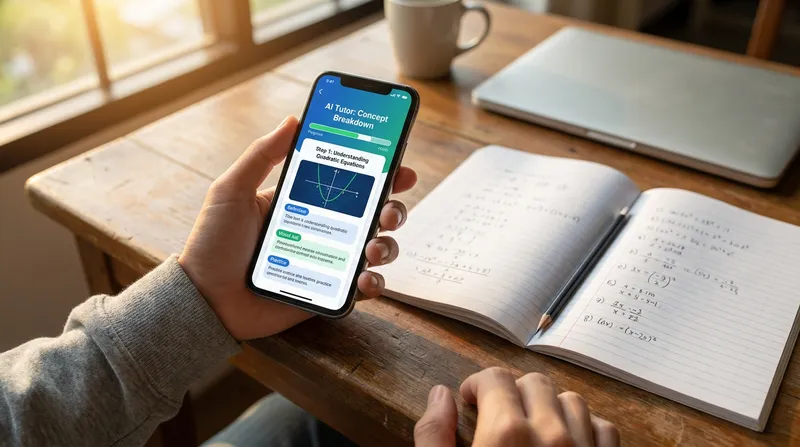
The educational landscape has shifted dramatically. Schools across the United States have implemented strict academic integrity generative AI policies, specifically targeting platforms that offer direct answer keys. This crackdown has left many students feeling stranded. They are caught between the intense pressure to maintain good grades and the very real fear of triggering an honor code violation simply by looking for a study guide.
The core of this crisis is a fundamental misunderstanding of how different study tools operate behind the scenes. Many families do not realize that the websites they have used for years are now heavily monitored by school administrators. When a student needs help, old methods of finding answers are no longer safe. The good news is that technology has evolved. By understanding the new rules, you can equip your child with tools that build their confidence and their skills while maintaining the highest standards of academic honesty.
Is Chegg Considered Cheating? The Truth About Database Lookup Sites
Let us address the most common question families ask: is Chegg considered cheating? According to modern high school and university honor codes, using a platform to copy verbatim answers for graded assignments is a direct violation of academic integrity.
Tools that rely on crowdsourced databases simply provide a copy-and-paste solution. When a student submits an exact match from a known database, it immediately triggers plagiarism flags in the school grading software. The administrative process for tracking this is much more sophisticated than most people realize. According to official procedures from institutions like Highline College, universities have formalized processes where the Office of Community Standards and Student Conduct submits official requests to database sites. These requests spark honor code investigations to identify the exact person who accessed or shared the course material, using IP addresses and account timestamps.
To avoid plagiarism in assignments, you must understand the difference between looking up a static answer and learning a dynamic concept. If you are wondering about similar platforms and their safety profiles, check out our comprehensive guide on Is Brainly Legit? A 2026 Parent's Review of Safety, Accuracy, and Cheating Risks | Tutor AI Blog.
Actionable Tip for Parents: Review all study apps currently installed on your family devices. Delete any application that functions solely as an answer key. Replace them with tools that require the student to read through explanations and perform their own calculations.
Documenting Your Learning Process in the AI Era
The rise of strict academic policies has led schools to adopt automated detection software. Unfortunately, this has created a completely new source of anxiety for honest students. Many families worry that their child's original, hard-earned work might be falsely flagged by a rigid algorithm.
This fear is entirely justified. Research from the University of Michigan shows that AI detection tools currently face massive reliability challenges. They often struggle to distinguish between AI-generated text and high-quality student work, potentially leading to false positives that unfairly penalize students.
The absolute best defense against these flawed systems is to focus entirely on building genuine academic integrity and documenting your learning journey. Just as we discussed in our article on Confident But Wrong: Why Math Scanners Misread Handwriting (And How to Fix It) | Tutor AI Blog, relying entirely on automated tools without showing your manual work is a recipe for disaster. By keeping a clear record of how you arrived at an answer, you can easily prove that the work is your own.
Actionable Tip for Students: Always keep your scratch paper and save multiple drafts of your essays in Google Docs or Microsoft Word. If a teacher ever questions your work, you will have a clear, documented timeline of your personal learning process to prove your academic integrity.
How to Use AI for Homework Without Cheating
Finding AI study tools for middle school and high school means shifting your mindset from passive copying to active learning. You can absolutely use AI to understand difficult concepts without violating school rules. The secret lies entirely in how you ask for help. When you prompt an AI properly, it acts as a personal tutor rather than an answer key.
Here is a practical checklist for how to use AI for homework across multiple subjects:
- Ask for a similar example (Math): Instead of typing your exact homework question, ask the AI to create a similar problem with different numbers and solve it step by step. You can then apply that exact same logic to your actual assignment.
- Brainstorm outlines (English): Instead of asking the AI to write your history paper, ask it to help you outline three potential arguments for the causes of the American Revolution.
- Review data (Science): Feed your raw chemistry lab data to the AI and ask, "Are there any outliers in this data set that I should investigate further?"
- Check your methodology: Try solving the problem yourself first. Then, give the AI your written work and ask, "Where did I make a mistake in my steps?"
- Generate practice quizzes: Ask the AI to test your knowledge on a specific chapter so you can identify your weak spots before an exam.
The ultimate goal is to understand the material well enough to pass a closed-book exam where no digital tools are allowed. If you want more detailed strategies on this active learning approach, read our guide on Beyond Brainly: How to Use AI for Active Homework Practice (Without Cheating) | Tutor AI Blog.
Shift from Direct Answers to Socratic AI Tutoring
To truly master a subject, students need a Socratic AI tutor. The Socratic method is a teaching style where a tutor asks guiding questions instead of giving you the answer directly. It forces you to think through the problem yourself, which is how real learning happens and how students build immense academic confidence.
According to researchers at the University of Queensland, AI-powered Socratic tutors use interactive dialogues to stimulate critical thinking and encourage knowledge exploration. This makes the learning experience much more natural and flexible compared to traditional teaching methods.
When using an AI math solver step by step, train your child to use prompts like, "Give me a hint for step two," instead of, "Solve this whole page." For more information on avoiding tools that do the thinking for you, see our breakdown of The 'answer engine' trap: Why quick-fix math solvers fail (and the best Gauthmath alternatives for exams) | Tutor AI Blog.
A Real-Life Success Scenario
Imagine a student named Sarah, a high school junior struggling with AP Physics. Instead of copying answers from a database at 11 PM, she uses a Socratic AI tutor. She snaps a picture of her free-body diagram, and the AI asks, "What forces are acting on the object in the y-direction?" By guiding her rather than giving her the answer, Sarah learns the core concept. The following week, she easily aces her closed-book exam because she actually understands the physics involved.
Actionable Tip for Tutors and Parents: Sit with your student during their first few sessions using an AI tool. Guide them to ask "Why did the formula change here?" rather than just copying the next line of math.
Safe AI Homework Help for Kids: A Guide for Busy Parents
We know exactly how overwhelming it is to balance a busy work schedule with helping your middle or high schooler through complex subjects. You want to provide support, but you also need to protect their digital privacy. Finding an AI homework helper with parental controls is absolutely essential in today's digital environment.
State educational guidelines, such as those from the Massachusetts Department of Elementary and Secondary Education, mandate that AI use must comply with all relevant laws related to student data, including FERPA and COPPA. This legal framework protects students from unnecessary surveillance and unauthorized data sharing.
Safe AI study tools like Tutor AI prioritize this level of privacy by ensuring full COPPA compliance and providing a dedicated parent dashboard. This feature allows you to view weekly progress reports, identify the exact topics your child is struggling with, and celebrate their learning milestones without having to hover over their shoulder at the kitchen table.
Actionable Tip for Parents: Before downloading any educational app, verify that it is COPPA compliant. Check the privacy policy to ensure it clearly states that the company does not sell student data to third-party advertisers.
The Best Chegg Alternatives for High School Students
With strict new academic policies actively enforced, it is time to look for apps like Chegg but safe. Outdated crowdsourced platforms fail students because they offer the final answer without teaching the underlying process. When exam day arrives, students who rely on these shortcut tools find themselves completely lost and anxious.
The best Chegg alternatives for high school focus entirely on generative, step-by-step learning. We highly recommend reading Why Standard Math Apps Fail the Hardest High School Exams (And the AI You Should Use Instead) | Tutor AI Blog to fully understand this technological shift.
Tutor AI stands out as the ultimate safe alternative. Instead of pulling answers from a risky, monitored database, Tutor AI uses advanced photo-based problem solving to generate unique, step-by-step explanations in real time. It acts as a true educational companion with features like personalized learning paths and an essential offline mode. Tutor AI works even when your Wi-Fi is spotty at midnight. Its offline mode means your child is never stranded without support, regardless of connectivity.
Actionable Tip for Students: The next time you are stuck on a problem, use the "Snap. Solve. Learn." method. Take a photo of the problem with Tutor AI, read through the step-by-step explanation, put your phone away, and then attempt to solve the problem on paper entirely from memory.
Conclusion: Empowering Students with Safe AI Study Tools
Navigating the 2026 homework landscape does not have to be a source of stress for your family. By avoiding outdated database lookup sites, embracing the Socratic method, and prioritizing data privacy, you can safely integrate technology into your child's daily study routine.
Remember, needing extra help is completely normal. Getting that help is perfectly fine when it is done the right way. If you are exploring your options and want to see how different platforms compare, check out our 7 Best AI Tutoring Apps for Step-by-Step Explanations (2026 Guide) | Tutor AI Blog.
Tonight, instead of risking an honor code investigation with an outdated answer database, give your child a tool that actually teaches. Try Tutor AI free. Available 24/7, with step-by-step explanations that build real understanding and a parent dashboard to track their progress.
Frequently Asked Questions
Is Chegg considered cheating by most high schools and colleges?
While using Chegg as a general study guide is sometimes allowed, copying direct answers from its database for graded assignments is universally considered an honor code violation. Most educational institutions explicitly forbid using database lookup sites to complete homework.
How do schools initiate a Chegg honor code investigation?
Universities and high schools have formalized administrative processes where they submit official requests to database platforms. They do this to obtain timestamps, IP addresses, and user information when they suspect course materials have been compromised or copied.
How can I use AI for homework without cheating?
Advise students to use AI as a Socratic tutor. You should ask the AI to explain complex concepts, check your written methodology for errors, or provide similar practice problems, rather than asking it to generate the final answer for your assignment.
What is a Socratic AI tutor?
A Socratic AI tutor is designed to ask guiding questions and provide step-by-step hints. Instead of giving you the answer immediately, it forces you to do the critical thinking required to actually learn and retain the material for future exams.
Are there apps like Chegg but safe for middle schoolers?
Yes. Safe alternatives like Tutor AI exist specifically for this purpose. They offer COPPA compliance, strict parental controls, and a core focus on educational methodology rather than just providing an answer key, making them perfectly safe for middle and high school students.
Note: Every student learns differently. While these strategies are research-backed, results may vary. Adapt these techniques to fit your unique learning style and circumstances. *


