
If you are a parent of a middle or high school student in 2026, you probably know the nightly homework struggle all too well. It is 9:00 PM, your child is frustrated, and you are staring at a math or science problem that looks entirely foreign. In these moments of desperation, millions of students turn to online homework help sites.
However, this digital lifeline often brings a wave of new anxieties for parents. As we navigate the rapid explosion of AI in education this year, you might feel overwhelmed trying to support your child's academic success at home. Worse, you might be terrified that popular platforms could expose your kids to inaccurate information, predatory billing practices, or strict accusations of academic dishonesty at school.
One of the most popular platforms your child might be using is Brainly. But is Brainly legit? Is it a helpful study tool, or is it a shortcut that could get your child in trouble?
In this comprehensive review, we will explore the safety, accuracy, and ethical implications of using Brainly. We will also look at how modern AI alternatives are changing the landscape, giving you the facts you need to help your child use these tools responsibly.
What is Brainly and How Does Brainly Work?
Before we can evaluate if Brainly is safe or effective, we need to understand exactly what it is. At its core, Brainly is a crowdsourced, peer-to-peer educational Q&A platform. Think of it as a massive, global study group where students ask homework questions and other students (or subject enthusiasts) provide the answers.
Here is a breakdown of how the platform functions:
- The Point System: To encourage participation, Brainly uses a gamified point system. Students must spend points to ask a question. To earn more points, they have to answer questions asked by other students.
- Community Answers: When a student posts a question, anyone in the community can write a response.
- AI Integration: Recently, Brainly has integrated AI features to provide automated instant solutions alongside traditional community answers.
While the concept of students helping students is great in theory, it can be chaotic in practice. For example, if your child is researching complex topics like ecosystems and sustainability, they might receive an answer from a verified expert, or they might receive an answer from a 12-year-old guessing the answer just to earn points.
Actionable Tip for Parents: Sit down with your child tonight and ask them to give you a five-minute tour of how they personally navigate the Brainly app. Ask them to show you how they search for questions and how they decide which answers to trust. This opens a dialogue without making them feel interrogated.
Is Brainly Accurate? The Truth About Community Answers
One of the biggest concerns for parents and teachers is whether the information on Brainly is actually correct. Because anyone can create an account and post an answer, the quality of information is a mixed bag.
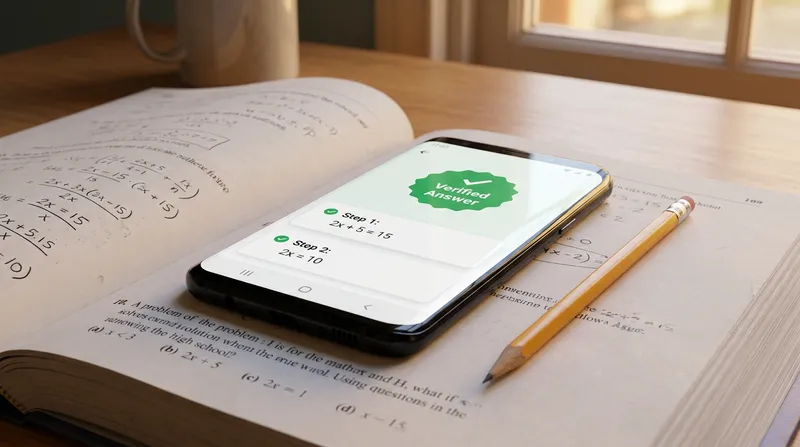
Brainly does have a moderation system. They offer "Expert-Verified" answers, which are reviewed by a team of moderators or subject matter experts. When a student finds an Expert-Verified answer, they can generally trust its accuracy.
However, the vast majority of answers on the platform are standard user answers. This is where the risk lies. If a student relies on an inaccurate crowdsourced answer, they are not just risking a poor grade on a single assignment. They risk cementing a fundamental misunderstanding of core concepts, which can snowball into larger academic struggles down the road.
For instance, if your child is learning how to factor trinomials, a slightly incorrect community answer will completely derail their understanding of algebra.
Actionable Tip for Parents: Teach your child the "trust but verify" method. Have them cross-reference any unverified Brainly answer with their class textbook or a dedicated step-by-step AI solver. Remind them that if an answer lacks a clear explanation of how the problem was solved, it should not be trusted.
Academic Integrity: Is Using Brainly Cheating?
This is perhaps the most pressing question for parents: is using Brainly cheating? The answer depends entirely on how the student uses the platform.
Using a homework help site to understand a difficult concept, view a step-by-step breakdown, or check your work after completing it yourself is not cheating. It is resourceful studying. However, typing a question into Brainly, copying the top answer word-for-word, and submitting it as original work is absolutely plagiarism.
Schools take this very seriously. According to a comprehensive survey published by Taylor & Francis Online, over 85 percent of students recognized that using homework help websites could lead to allegations of academic misconduct for plagiarism.
Can teachers see if you use Brainly? Yes, they often can. Many educators use sophisticated plagiarism detection software (like Turnitin) that scans massive databases, including public forums like Brainly. Furthermore, teachers know their students' unique writing voices. If a student who struggles with basic grammar suddenly submits an essay with college-level vocabulary pulled from a Brainly forum, red flags will go up.
To help your child navigate this safely, especially with writing assignments, you can explore resources like our guide on using an AI English solver for essays without cheating.
Actionable Tip for Parents: Draft a simple "homework contract" with your child. Clearly define the difference between getting unstuck and cheating. Agree that study apps are tools for learning the process, not just for stealing the product.
Is Brainly Safe for Kids? Privacy and App Safety
Beyond academic concerns, parents must consider digital safety. Brainly offers a free version of its app, which means it relies heavily on advertisements and community interaction to sustain itself.
The free version contains targeted ads, and some versions of the free app have included community interaction features that may not be fully moderated. While the platform has community guidelines, any public forum carries the risk of inappropriate content or interactions with strangers.
From a legal standpoint, platforms must protect young users. The Federal Trade Commission (FTC) enforces the Children's Online Privacy Protection Act (COPPA), which requires websites to obtain verifiable parental consent before collecting personal information from children under 13. Brainly does have age restrictions, but kids often bypass these by entering fake birth years.
Actionable Tip for Parents: Review the privacy settings on your child's smartphone. Set up operating system-level parental controls (like Apple Screen Time or Google Family Link) to restrict in-app purchases, limit ad tracking, and ensure they cannot chat with strangers on study forums.
The Financial Side: Is Brainly Plus Worth It or a Scam?
To bypass the ads and get unlimited access to Expert-Verified answers, Brainly pushes users toward its premium subscription, Brainly Plus. But is Brainly Plus worth it?
Many parents take to the internet asking if Brainly is a scam due to their billing practices. While Brainly is a legitimate educational company, their subscription model catches many busy families off guard.
According to consumer reports from the Better Business Bureau (BBB), numerous complaints detail users being charged recurring annual fees despite attempts to cancel. The company has a strict auto-renewal policy and often denies refunds if you forget to cancel before the trial ends.
Actionable Tip for Parents: If you decide to try Brainly Plus, do not use your primary debit card. Use a virtual credit card with a set limit, or immediately toggle off the "auto-renew" feature in your Apple App Store or Google Play account settings the moment you sign up. Remember, simply deleting the app from your phone does not cancel the billing subscription.
AI Tutors vs Brainly: Best Brainly Alternatives for 2026
As we navigate 2026, the educational technology landscape has evolved dramatically. The traditional community forum model of Brainly is quickly being replaced by dedicated AI tutors.
Why are AI tutors becoming the preferred choice for parents and teachers? It comes down to learning methodology. While Brainly often just gives a student the final answer, modern AI tools (like Tutor AI) are designed to act like real teachers. They provide instant, step-by-step breakdowns of complex problems, forcing the student to learn the "why" behind the answer.
A growing body of research on AI-assisted tutoring, including analysis from The Brookings Institution, suggests that tutoring systems integrating generative AI can deliver substantial learning gains, better knowledge transfer, and improved student motivation compared to older methods.
Furthermore, dedicated AI solvers are built with features that directly address parent concerns:
- Snap. Solve. Learn: Unlike searching through forums, tools like Tutor AI let your child simply snap a photo of a printed or handwritten problem to instantly receive a step-by-step explanation. No typing is required.
- Parent Progress Tracking: Unlike Brainly, which gives parents no visibility into what their child is actually learning, Tutor AI includes a parent-facing progress report so you can see exactly which topics your child has mastered and where they still need support.
Here is a quick look at how the options stack up:
| Feature | Brainly Free | Brainly Plus | Tutor AI |
|---|---|---|---|
| Step-by-Step Explanations | Sometimes | Yes | Always |
| Photo-Solving Capability | No | Text search focus | Yes (Snap. Solve. Learn.) |
| Parent Progress Tracking | No | No | Yes |
| Ad-Free Experience | No | Yes | Yes |
Dedicated AI solvers are particularly effective for STEM subjects. If your child is struggling with calculus or physics, you can read more about top problem solvers for high school STEM classes. Apps like Tutor AI offer 24/7 availability, meaning your child can get accurate, personalized help at 11 PM without relying on a stranger on the internet.
Actionable Tip for Parents: Download a dedicated AI solver this week. Have your child test it alongside Brainly for one assignment. Ask them which tool actually helped them understand the material better for their upcoming test.
A Parent's Action Plan for Stress-Free Homework
Ultimately, Brainly is a legitimate platform, but it requires careful supervision. It carries risks regarding answer accuracy, potential academic dishonesty, and frustrating billing practices. You do not need to be a subject matter expert to help your child succeed, but you do need to guide them on how to use these digital tools ethically.
By keeping communication open, setting clear boundaries around cheating, and exploring newer AI alternatives that prioritize step-by-step learning, you can end the nightly homework tears.
For more strategies on supporting your child through academic stress, check out our guide on how to help a child struggling with math.
Ready to give your child a smarter homework tool? Download Tutor AI today on iOS or Android. Your child can get their first step-by-step solution in under a minute, helping you end the nightly homework tears and build real study confidence.
Frequently Asked Questions
Can teachers tell if you use Brainly for homework?
Yes. Teachers can often spot when a student uses Brainly because the phrasing may not match the student's usual writing style. Furthermore, many educators use plagiarism detection tools (like Turnitin) that scan public databases, including Brainly forums, to flag copied text.
How do I safely cancel my Brainly Plus subscription?
To avoid billing issues, you must cancel your subscription through the exact platform you used to sign up (Apple App Store, Google Play Store, or the Brainly website). Deleting the app from your phone will not stop the recurring charges. Always check your subscription settings directly in your device's app store.
Is the free version of Brainly safe for younger kids?
The free version contains advertisements and community interaction features. While moderated, parents of children under 13 should supervise their use to ensure they do not click on inappropriate ads or share personal information online. Setting up parental controls on the device is highly recommended.
What is the best Brainly alternative for math homework in 2026?
Dedicated AI math solvers (like Tutor AI) are often better alternatives because they provide step-by-step explanations rather than just the final answer. This forces the student to learn the methodology, which is critical for passing exams and truly understanding the subject matter.
Does using an AI tutor count as cheating?
It depends entirely on how it is used. If a student uses an AI tutor to generate an essay and submits it as their own, that is cheating. If they use it to break down complex equations, explain difficult concepts, or generate practice questions, it is a powerful and ethical study aid.
Note: Digital safety features and app policies change frequently. Always review the current privacy policy of any platform your child uses. The tips in this article are general guidelines. Please adapt them to your family's specific needs and your child's school academic integrity policy.