
Your Ultimate Guide to Environmental Science Homework: From Ecosystems to Sustainability
It's 10 PM. Your environmental science homework asks you to explain how deforestation in the Amazon affects coral reefs in the Caribbean. You stare at a diagram of the nitrogen cycle, then at the case study, and your brain just... stops. Sound familiar? You're not alone. Environmental science homework can feel uniquely overwhelming because it pulls you in a dozen different directions-one minute you're a biologist, the next a chemist, and then suddenly a policy analyst.
But here's the good news: it's not about memorizing a million different facts. It's about learning to connect them. This guide is your roadmap. We'll break down how to think like an environmental scientist, master core concepts with free resources, and apply your knowledge to ace your homework and exams. We'll even show you how AI tutors can act as your personal guide, turning confusion into confidence. For parents trying to help, this guide offers strategies to support your student without having to become an expert yourself, a challenge many face with complex homework as discussed in A Parent's Guide to Homework Apps.
Why Environmental Science Feels So Hard (and How to Think Like a Scientist)
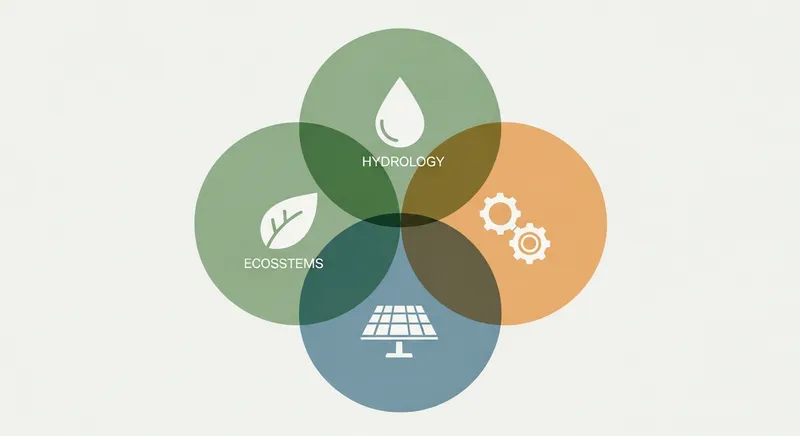
The biggest hurdle is the way this subject mixes biology, chemistry, economics, and policy all together. As top universities like Stanford's Earth Systems Program emphasize, environmental science requires you to integrate these fields to solve problems. You're not just learning facts; you're learning to think in systems. This is a skill, and like any skill, it can be learned.
Here are two actionable ways to start thinking like an environmental scientist today:
-
Actionable Tip 1: 'Connect the Dots.' As you study, constantly ask yourself, "How does this affect that?" For example, when learning about burning fossil fuels, don't just stop at 'releases CO2'. Ask: How does that CO2 affect ocean pH? How does a lower ocean pH affect coral reefs? How do dying coral reefs affect coastal communities? This creates a web of knowledge, not just a list of facts.
-
Actionable Tip 2: 'Think in Scales.' Practice zooming your perspective in and out. Start with a global issue like climate change. Then, zoom into a regional impact, like prolonged drought in a specific area. Zoom in further to a local ecosystem, like a forest struggling with that drought. This helps you see how large-scale problems have tangible, small-scale consequences.
Mastering the Core Concepts: Free Worksheets & Study Guides
Before you can connect the dots, you need to understand the dots themselves. This section is your hub for breaking down the key topics in your homework, complete with links to authoritative resources and actionable study tips.
The Cycles: Carbon, Nitrogen, and Water
These cycles describe how essential matter flows through our planet. It's easy to get lost in the complex diagrams.
- Actionable Tip: Instead of just memorizing a diagram, try to tell the "story" of a single atom. For the carbon cycle, start with a carbon atom in a CO2 molecule in the atmosphere. Where does it go next? It might be absorbed by a plant (photosynthesis), eaten by an animal, and then returned to the soil when that animal decomposes. According to NOAA's educational resources, human activities are significantly altering this natural balance. Telling a story makes the process active and easier to remember.
- Key Insight: Biogeochemical cycles aren't just diagrams; they are the planet's fundamental plumbing and recycling systems.
Biodiversity and Ecosystems
Biodiversity is the variety of all life on Earth. It's what makes ecosystems resilient and healthy. But why does it matter if one species of frog disappears?
- Actionable Tip: Use a real-world analogy. Think of a cornfield. It has very low biodiversity (mostly corn). If a disease that targets corn comes along, the entire system can collapse. Now, think of a rainforest with thousands of species. If one type of tree gets a disease, the forest as a whole can survive because of its variety. This variety is crucial, especially when organizations like The Nature Conservancy report that we are losing this diversity at an alarming rate.
- Key Insight: Biodiversity acts like an insurance policy for ecosystems, ensuring they can withstand change.
Energy Resources: Renewable vs. Non-Renewable
This topic is a classic for environmental science homework. Going beyond a simple list of sources will help you stand out.
- Actionable Tip: Create a 'Pros and Cons' table for sources like solar, wind, coal, and natural gas. Include columns for cost, environmental impact, and reliability. For instance, solar energy: Pros - renewable, low emissions; Cons - weather dependent, requires storage. To make it even more relevant, research the primary energy sources in your own state. A common argument against renewables is their reliability, but the Union of Concerned Scientists explains that when paired with energy storage, they can be highly reliable. Ask TutorAI: "Compare the lifecycle carbon footprint of wind turbines vs. natural gas plants step-by-step."
- Key Insight: No energy source is perfect; the key is understanding the trade-offs between environmental impact, cost, and reliability.
From Theory to Application: How to Analyze Environmental Case Studies
This is where many students get stuck. You know what the carbon cycle is, but how do you use that knowledge to analyze a case study on sustainable agriculture? The key is having a framework.
Use this simple 4-step framework for any case study analysis:
- Identify the Core Problem: What is the central environmental challenge? (e.g., soil degradation from intensive farming).
- Map the Stakeholders & Systems: Who is involved? (Farmers, consumers, government). What systems are at play? (Economic, ecological, social).
- Connect to Core Concepts: Where do your classroom topics fit in? (e.g., Nitrogen cycle, soil erosion, water pollution from runoff).
- Evaluate the Solutions/Outcomes: What was done to address the problem? Was it successful? Why or why not?
- Actionable Tip: Apply this framework to a real-world example. Iowa State University Extension offers a great case study of a sustainable farm that actively manages nutrient cycling and biodiversity. Using a framework turns a confusing story into a structured analysis, a skill that's also helpful for tackling complex word problems as detailed in The Student's Guide to AI Word Problem Solvers.
Your Secret Weapon for Homework: Using an AI Tutor
Worksheets are great for learning concepts, but they can't help you apply them to a specific case study at 11 PM. This is where an AI tutor becomes your secret weapon. Instead of just giving an answer, a good AI tool helps you Snap. Solve. Learn. It provides step-by-step explanations that help you truly understand the process.
Stuck on a complex diagram or a tricky word problem? Just snap a photo with TutorAI and get instant, detailed explanations of each component. It's like having a 24/7 study partner that helps you bridge the gap between knowing a topic and understanding it.
-
Actionable Tip: Be specific with your prompts. Here are some you can copy and paste:
- For Concept Explanations: "Explain the greenhouse effect to me like I'm 15. Use a simple analogy."
- For Case Study Help: "I'm analyzing a case study about the Aral Sea disaster. What are the key environmental science concepts (like salinization, water diversion, and ecosystem collapse) I should be looking for?"
- For Math Problems: Just snap a picture of the problem, and TutorAI will break down the solution step-by-step.
If you're new to the idea, check out our guide on What Is an AI Tutor? to see how it can boost your grades and confidence.
A Note for Parents: Is your child stuck on their homework? An AI tutor empowers them to find the answer independently while still learning the underlying concepts. You can support their learning journey without needing to be an expert in nutrient cycles or energy policy yourself.
Acing Your Exam: How to Prepare for the AP Environmental Science Test
Success on the AP exam isn't just about what you know; it's about how you show it. The test requires strong analytical skills, especially for the Free Response Questions (FRQs).
-
Actionable Tip 1 (Data Questions): When you see a graph or chart, don't panic. Before you even read the question, read the title, the x-axis label, the y-axis label, and the key. This gives you context and prevents misinterpretation.
-
Actionable Tip 2 (FRQs): Pay close attention to the 'task verbs.' 'Describe' means you should provide the relevant characteristics of a topic. 'Explain' means you need to provide information about how or why a relationship, process, or pattern occurs. They are not the same! For practice, use resources that are aligned with the official curriculum, like the free AP Environmental Science course on Khan Academy. This kind of targeted prep is similar to strategies used for other major exams, which you can read about in The Ultimate Guide to Free Digital SAT Prep.
Beyond the Classroom: Project Ideas & Discussion Questions
Environmental science is all around you. Taking your learning beyond the textbook can make it more engaging and memorable.
-
Project Idea: Instead of a standard poster, try something hands-on. NASA provides resources for inquiry-based labs you can adapt, like measuring CO2 production or modeling sea-level rise. Or, conduct a trash audit of your own home to track your family's waste for a week and identify ways to reduce it.
-
Discussion Questions: This subject is full of complex ethical questions. Use these to spark a discussion with friends, family, or classmates:
- Should developing countries, which have historically polluted less, have the same environmental restrictions as developed countries?
- Is it ethical to place a monetary value on a natural resource, like a forest or a river?
Note: Every student learns differently. While these strategies are research-backed, results may vary. Adapt these techniques to fit your unique learning style and circumstances.
Ready to turn environmental science confusion into confidence? TutorAI's step-by-step explanations and 24/7 availability mean you're never stuck. Download free on iOS and Android to snap a photo of any problem and get instant help.
Frequently Asked Questions
What is the hardest part of AP Environmental Science?
The hardest part for most students is the interdisciplinary nature of the course. It requires you to constantly connect scientific principles (like biology and chemistry) with data analysis, economics, and real-world policy. The Free Response Question (FRQ) section is often the most challenging because it directly tests this synthesis skill, asking you to apply multiple concepts to a single scenario.
How do I get a 5 on the AP Environmental Science exam?
There's no magic bullet, but a strategic approach makes a huge difference. To score a 5, you should:
- Focus on Connections: Don't just memorize facts in isolation. Always ask how different systems affect each other.
- Master Data Interpretation: Get very comfortable reading and analyzing graphs, charts, and data tables. Always read the title, axes, and key first.
- Understand the FRQs: Learn the difference between 'task verbs' like 'Describe' vs. 'Explain'. Practice outlining your answers before you write to ensure you hit all the required points.
- Use Reputable Resources: Consistently practice with materials from sources like the College Board and Khan Academy's AP course to align with exam standards.
What is the difference between global warming and climate change?
Think of it this way: global warming is the cause, and climate change is the collection of effects.
- Global Warming specifically refers to the long-term heating of Earth's climate system observed since the pre-industrial period, primarily due to human activities like burning fossil fuels which increase greenhouse gas concentrations.
- Climate Change is a much broader term that includes that warming and all the other effects it causes. This includes rising sea levels, more frequent and intense heatwaves, changing rainfall patterns, and ocean acidification.
Where can I find good environmental science case studies with answers?
Finding case studies with direct 'answer keys' is rare because they are designed to make you think critically. However, the best sources are university websites. The National Center for Case Study Teaching in Science (NCSCTS) has a large, peer-reviewed library. Instead of answers, they provide extensive teaching notes that guide you through the analysis and highlight the key takeaways. You can also use an AI tutor to help analyze a case study by asking it to identify key concepts or evaluate potential solutions, which helps you check your own understanding.
How can I get free help with my environmental science homework?
You can build a powerful, free support system by combining a few key resources.
- For structured lessons and practice: Use Khan Academy's free, AP-aligned course.
- For clear concept explanations: Visit educational pages from government agencies like NOAA (for climate and oceans) and NASA (for Earth systems).
- For specific, tricky questions: When you're stuck on a particular problem and need a step-by-step walkthrough, a free AI homework helper like TutorAI can provide instant support and detailed explanations, 24/7.


