Many students are falling into a modern test prep trap. They use AI homework helpers to breeze through individual math problems on a Tuesday night, but when Saturday morning rolls around, they lose momentum halfway through a full-length Digital SAT practice test. If this sounds familiar, you are not alone. Whether you are a student managing your own prep or a parent guiding the process, this guide is written for both of you. The core problem is not a lack of knowledge. The real issue is a complete lack of test-taking stamina.
Students are practicing micro-level problem solving, but the new Digital SAT demands macro-level mental endurance. When students rely solely on quick-fix apps to scan and solve one question at a time, they never train their brains to focus for the full 134 minutes required on test day. They burn out, lose their pacing, and ultimately see their scores slip during the second half of the exam.
In this comprehensive guide, we will show you how to transition from quick homework fixes to a structured weekend mock test strategy. You will learn how to use the official Bluebook app, manage your time effectively, and review your mistakes using true educational tools like Tutor AI. Our philosophy is simple: Snap, Solve, Learn. We will weave this approach throughout our strategy to help you build the endurance to perform under pressure. Let us build that stamina and get those scores up.
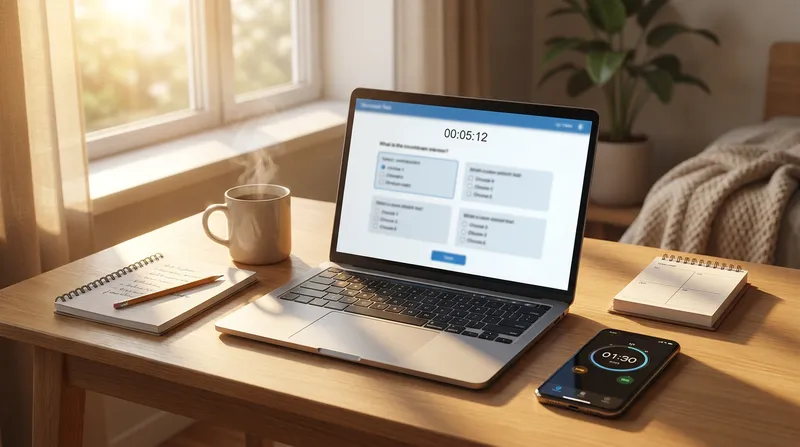
Get Homework Help: The Core Problem with Micro-Learning
When students look to get homework help online, they often turn to basic scanner apps or crowdsourced forums. Platforms that simply hand over the final answer are great for instant gratification. However, they train the brain for very short bursts of attention. The Digital SAT is a marathon, not a sprint.
Cognitive fatigue is a very real biological process. According to educational researchers, mental fatigue is induced after performing a sustained cognitive task for just 10 to 20 minutes. If a student is only used to focusing for five minutes at a time while scanning a math worksheet, their brain will struggle to sustain focus during the reading and writing modules of the SAT.
This is exactly why a basic math scanner app isn't enough. To truly succeed, students need to build cognitive endurance. They need to practice sitting in one place, staring at a screen, and solving complex problems for over two hours. If they only practice one question at a time, the actual test environment will feel much more demanding.
Actionable Tips for Parents and Students:
- Audit your study habits: Track how long you study before checking your phone. If it is less than 15 minutes, you need to start building your focus window.
- Delay gratification: When you get stuck on a problem, try to solve it for three full minutes before reaching for an AI tutor or homework helper.
- Read long-form content: Build reading stamina by reading articles or book chapters for 30 uninterrupted minutes every day.
The Digital SAT Adaptive Format: Why Stamina Matters More Than Ever
The Digital SAT is fully adaptive. This means the test changes based on how well you are doing. Both the Reading and Writing section and the Math section are split into two modules. Your performance on the first module directly determines the difficulty of the questions you will face in the second module.
If you do well in Module 1, Module 2 will be significantly harder. This means the absolute hardest questions on the test come at the exact moment when cognitive fatigue is at its peak (minutes 90 to 134). If you lose your stamina, your brain will freeze on these high-value questions, and your score may not reflect your true ability.
Many students wonder why their child freezes on math word problems. Often, it is not the math itself. It is the fact that the word problem appears at the end of a grueling two-hour testing session. Mental endurance is the secret weapon that most competitors completely ignore.
Actionable Tips for the Adaptive Format:
- Pace yourself early: Do not rush through Module 1 just because it feels easier. Double-check your work to ensure you get routed to the higher-difficulty (and higher-scoring) Module 2.
- Practice mental resets: Teach your child to close their eyes and take three deep breaths between Module 1 and Module 2 to reset their focus.
- Embrace the struggle: Remind students that if the test feels incredibly difficult at the end, it means they are doing well.
The Weekend Warrior Framework
To bridge the gap between short homework sessions and the real exam, we recommend the Weekend Warrior Framework. This is a step-by-step Saturday morning routine designed to mimic real test conditions. It is the most effective way to build stamina.

Replicate the Real Test Environment
You cannot build stamina while lying in bed with a laptop on your chest and music playing in the background. The brain relies on context clues. You must practice how you play. Learn how to take a free digital SAT practice test at home by setting up a strict environment.
Actionable Tips for Saturday Morning (Snap & Solve):
- Start at 8:00 AM: Wake up, eat a protein-rich breakfast, and clear your desk completely.
- Remove all distractions: Put your phone in another room. No music, no snacks on the desk, and no talking. Keep physical scratch paper handy, as this aligns with real test conditions.
- Use the official app: Open the Bluebook app and start the test exactly at 9:00 AM.
- Manage your breaks: Use the official 10-minute break wisely to step away from the screen, hydrate, and reset. If you need a quick bathroom break during a module, take it quickly; managing your physical comfort is part of managing your stamina.
Master Digital SAT Time Management
Time management is a critical component of stamina. If you mismanage your time early on, you will panic later, which drains your mental energy twice as fast. The Bluebook app has a built-in timer at the top of the screen. Students must learn to glance at it without letting it cause anxiety.
Actionable Tips for Time Management:
- Use the flagging tool: If a question takes more than 60 seconds and you are completely lost, flag it and move on. Do not let one question drain your mental battery.
- Hide the timer if needed: If the countdown causes panic, you can hide it until the final five minutes of the module.
- Practice the two-pass approach: Go through the module once to answer all the easy and medium questions, then use your remaining time to tackle the flagged hard questions.
The Post-Test Analysis: Sunday Review Strategy (Learn)
Taking the mock test on Saturday builds your stamina, but reviewing it on Sunday is what actually increases your score. Taking a test without reviewing your mistakes is like running on a treadmill: you are sweating, but you are not actually going anywhere.
Official data proves that full-length practice works. According to the College Board, students who completed one, two, and three or more full-length digital practice tests on Bluebook scored 61, 96, and 111 points higher than matched peers who practiced none. Furthermore, data from Khan Academy shows that twenty hours on their Official SAT Practice is correlated with an average score increase of 115 points.
When you identify a knowledge gap during your Sunday review, you need more than just the correct letter answer. You need to understand the process. Instead of asking for just the final answer, use Tutor AI to break down the exact problem you missed. You can simply snap a photo of the tricky problem from your scratch paper or practice screen to instantly load it into the app. Tutor AI provides detailed, step-by-step solutions that explain the "why" behind the math, acting as a 24/7 tutor.
Actionable Tips for Sunday Review:
- Categorize your errors: Did you get the question wrong because of a careless mistake, a time crunch, or a true knowledge gap?
- Review your correct guesses: If you guessed and got it right, you still need to review it. You might not get so lucky on test day.
- Keep an error log: Write down every missed question, the correct answer, and the specific reason you missed it in a dedicated notebook.
- Focus on weak areas: If your mock test shows you struggle with quadratic equations, spend your week practicing only quadratics. Combine official resources with AI tools to create the ultimate free Digital SAT math study stack.
- Use the built-in Desmos calculator: Practice using the integrated graphing calculator during your study sessions so you are fast and efficient on test day.
- Learn multiple methods: Use step-by-step analysis to see different ways to solve the same problem. Sometimes algebraic solving is best, but other times, plugging in the answer choices is faster.
Expert Answer: How to Build Cognitive Endurance
Parents often ask us how they can help their teenagers build mental stamina without causing burnout. The expert answer is progressive overload during your daily study sessions. Just like training for a marathon, you do not start by running 26 miles on day one. You build up slowly during the week so that your weekend mock tests feel manageable.
For students: Start by studying for 30 minutes without a break on a Tuesday. The next week, push it to 45 minutes. Then 60 minutes. By the time test day arrives, sitting for 134 minutes will feel completely normal.
For parents: You can play a huge role in this process. You can learn how to help your child with math homework using a scanner app in a way that promotes real learning rather than just providing the answers. Sit with them, encourage them to read the step-by-step explanations, and celebrate their progress. You can also use Tutor AI's parent dashboard to monitor which topics your teen is struggling with most, so your weekend review conversations are informed by real data rather than guesswork.
Actionable Tips for Parents:
- Celebrate the process, not just the score: Praise your child for sitting through the full two-hour mock test, regardless of the final score.
- Provide healthy fuel: Ensure they have a nutritious breakfast on mock test days to keep their blood sugar stable.
- Know when to step back: If tensions run high during homework time, suggest they use a step-by-step solver independently instead of forcing a frustrating parent-child tutoring session.
Frequently Asked Questions
Are Bluebook practice tests accurate to the real Digital SAT? Yes, the practice tests provided in the College Board's Bluebook app are the most accurate representation of the real exam. They use the exact same adaptive testing engine, interface, and built-in tools (like the Desmos calculator) that you will see on test day.
How many full-length Digital SAT practice tests should I take? We recommend taking at least three to four full-length practice tests before your actual exam date. Space them out every two to three weeks. This gives you enough time to review your mistakes and learn new concepts between tests. Taking a test every single weekend can lead to severe burnout. For additional practice questions, you can read our guide on where to find free digital SAT prep questions.
How long should I spend reviewing a full Digital SAT mock test? You should plan to spend at least as much time reviewing the test as you did taking it. A thorough Sunday review session should take about two to three hours. This time is best spent categorizing your errors, updating your error log, and using step-by-step tools to understand the core concepts behind missed questions.
What is the best time of day to take an SAT mock test? Always take your mock test on a Saturday morning at 9:00 AM. Your body has a circadian rhythm, and you want to train your brain to be at its absolute sharpest during the exact hours you will be taking the real exam.
How do I stop running out of time on the Math module? Running out of time is usually a pacing issue. Focus on working efficiently through the easier questions in Module 1. Use the flagging tool for any question that takes longer than 60 seconds, and master the built-in Desmos calculator to save time on complex algebra. Building your cognitive endurance through full-length practice will also help you maintain your speed during the second half of the test.
Can AI tools help with the Reading and Writing section? Yes. While many tools are known for math capabilities, advanced AI platforms can also assist with reading comprehension and grammar rules. Our platform provides comprehensive support across multiple subjects to help you break down complex text and understand grammar rules step-by-step.
Conclusion
Scoring high on the Digital SAT requires more than just knowing the formulas. It requires the mental stamina to execute that knowledge perfectly over the course of 134 minutes. By moving away from the micro-learning habits created by basic answer-generating apps, and embracing the Weekend Warrior Framework, you can build the endurance necessary to succeed.
Remember to replicate the test environment on Saturdays, and use Sundays for deep, analytical review. When you hit a roadblock during your review, do not just look for a quick answer. Explore 5 ways to use a free AI math solver to boost your teen's math confidence before finals to transform your study sessions.
With consistent practice, targeted review, and the right tools in your corner, you can conquer the Digital SAT and achieve the score you deserve. Ready to study smarter? Download Tutor AI today and experience the difference of true, step-by-step learning.
Note: Every student learns differently. While these strategies are research-backed, results may vary. Adapt these techniques to fit your unique learning style and circumstances.