
We have all been there. It is 7:30 PM on a Tuesday, dinner is getting cold, and a single algebra worksheet has brought your entire household to a standstill. You look at the math problem, realize you have absolutely no idea how to solve it, and feel that familiar knot of anxiety form in your stomach. Your child is frustrated, you are exhausted, and the nightly dinner table arguments over homework have officially begun.
Middle school homework power struggles are a deeply painful reality for millions of families. The transition from elementary school to middle school brings a massive leap in academic expectations. Suddenly, you are faced with modern teaching methods (like Common Core math) that look completely foreign. As a parent, you want nothing more than to help your child succeed. However, this desire often collides with a deep fear: if you help them too much, are you ruining their independence? Are you accidentally doing the work for them and enabling cheating?
If you are tired of being the "homework police" and want to reclaim your family evenings, you are not alone. In this guide, we will break down exactly why middle school homework is so difficult and provide an actionable, family-friendly framework to support your child's learning. You will learn how to help your middle schooler with math homework without actually doing it for them, allowing you to step back and watch their confidence grow.
The Middle School Homework Trap: Why It Gets So Hard
The jump to middle school is not just a change in scenery. It is a fundamental shift in how students are expected to learn, manage their time, and process information. In elementary school, teachers hold students' hands through most assignments. By middle school, students are suddenly juggling multiple teachers, complex projects, and a heavier homework load.
For parents, this transition is equally jarring. You are used to being heavily involved in your child's academic life, but continuing that level of involvement in middle school often backfires. When parents hover over every assignment, they can inadvertently increase student anxiety and reduce self-reliance. In fact, research from Scholastic highlights that over 30 years of studies show that when parents are overly immersed in homework, they deny kids the chance to become independent and can actually increase student anxiety.
It is completely valid to want to help your child when they are struggling. However, the goal during these years is to transition your role from a "homework enforcer" to a "supportive guide." You want to build a safety net that catches them if they fall, rather than carrying them across the finish line yourself.
Why Middle School Math Feels Like an Alien Language
Nothing triggers a middle school homework meltdown quite like math. Many parents look at their child's math homework and feel completely lost. You might find yourself saying, "That is not how I learned it when I was in school!"
This frustration is incredibly common. Modern academic standards, particularly Common Core math, focus heavily on conceptual understanding rather than the rote memorization many adults grew up with. As experts at Understood explain, Common Core math focuses more on concepts, problem solving, and flexible thinking rather than just calculations. The goal is to teach children why a math concept works, not just how to get the answer.
While this is a great way to learn, it leaves parents in a tough spot. When you do not understand the homework, it is easy to become visibly stressed. Unfortunately, this stress is contagious. According to a study highlighted by The Hechinger Report, math anxious parents who help children on homework can inadvertently breed math anxious children.
So, what can you do when you are completely stumped?
- Take a deep breath: Before you react to a confusing worksheet, regulate your own emotions.
- Model a growth mindset: Instead of saying, "I am terrible at math," try saying, "I do not know how to do this yet, but we can figure it out together."
- Lean on modern tools: You can read more about no judgment, infinite patience: How an AI math tutor eases middle school math anxiety to see how technology can bridge this generational learning gap.
Executive Function and the ADHD Factor
To truly understand middle school homework struggles, we have to talk about the brain. Specifically, we need to look at "executive function." Executive function refers to the mental skills that include working memory, flexible thinking, and self-control. It is the CEO of the brain, responsible for organizing tasks, managing time, and starting assignments.
Middle school demands a massive amount of executive function. If your child has ADHD, this demand can feel impossible. As ADDitude Magazine points out, the ADHD brain develops more slowly in the prefrontal cortex, meaning a middle schooler may be navigating academic demands with the executive function skills of an elementary student.
The Overload Effect: When a student with ADHD looks at a worksheet with 20 algebra problems, their brain often perceives it as one massive, insurmountable threat. This leads to paralysis, procrastination, and eventually, a meltdown.
To help, you must reduce their cognitive load. Break large assignments into smaller, manageable chunks. Fold a worksheet in half so they only see five problems at a time. Use a visual timer to create short, 15-minute work sprints followed by five-minute breaks. By acting as their external executive function, you help them build the stamina they need to eventually do it themselves.
A 4-Step Framework to Foster Middle School Independence
Stepping back from your child's homework does not mean abandoning them to fail. It means replacing your direct intervention with structured support systems. Here is a four-step framework to help you foster middle school independence.
1. Set the Scene (Not the Schedule)
One of the best executive function homework strategies is to control the environment, not the student. Your job is to create a distraction-free zone where learning can happen.
- Create a dedicated workspace: Ensure the area is well-lit, quiet, and stocked with necessary supplies like pencils, paper, and chargers.
- Remove digital distractions: Keep non-essential screens like TVs and gaming consoles out of the homework zone.
- Give them autonomy: Instead of dictating exactly when they must start homework, give them a window. Ask, "Do you want to start your math before or after dinner?" Giving them a choice builds vital time management skills while keeping you out of the dictator role.
2. Ask Guiding Questions Instead of Giving Answers
When your child gets stuck, your instinct is probably to show them exactly how to solve the problem. Resist this urge. Giving the answer directly harms long-term retention and teaches them to rely on you when things get hard.
Instead, use the Socratic method. Ask open-ended, guiding questions that force them to think critically:
- "What is the very first step the teacher showed you in class?"
- "Where did you get stuck on this specific problem?"
- "Can you show me a similar example from your textbook?"
- "What do you think would happen if you tried doing this part first?"
3. Introduce a Socratic AI Tutor as the Middleman
Sometimes, even guiding questions are not enough, especially when neither of you understands the material. This is where an AI homework helper for parents becomes a game-changer.
By introducing a Socratic AI tutor like Tutor AI, you insert a neutral third party into the homework equation. Tutor AI removes you from the "bad cop" role. When your child is stuck, you do not have to be the confused teacher. You can simply say, "Let's see what Tutor AI suggests for the next step."
And unlike a human tutor, Tutor AI is available 24/7, right when you need it most at 7:30 PM on a Tuesday. A true Socratic AI does not just hand over the answer. It guides the student step-by-step, explaining the "why" behind the math. To understand more about choosing the right tool, check out our guide on the Best AI Tutors for Students: Socratic AI vs. Answer Bots for Homework Help.
4. Monitor Progress Without Micromanaging
The final step in fostering independence is learning how to monitor your child's progress without hovering over their shoulder. Middle schoolers crave autonomy, and micromanaging will only lead to resentment.
Instead of checking every single math problem they complete, check in on major milestones. Better yet, utilize technology that offers a parent homework dashboard.
Tutor AI's progress reports let you keep track of how your child is doing. You can see which topics they are mastering and where they are struggling. This allows you to have informed, supportive conversations rather than acting as an interrogator.
Using Technology Safely: Step-by-Step Help vs. Cheating
One of the biggest concerns parents have about using digital tools is the fear of cheating. It is a valid worry. There are plenty of apps out there that simply scan a math problem and spit out the final answer. Using those tools is not learning; it is copying.
However, getting homework help without cheating is entirely possible if you choose the right tools. You need a step-by-step AI solver that acts like a digital tutor, not an answer key.
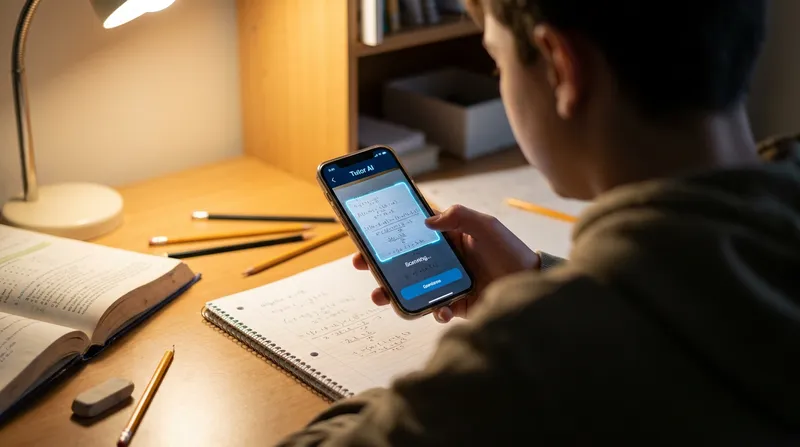
When a student uses an educational tool like Tutor AI, they take a photo of the problem, but they do not just get a number at the end. They receive a detailed, step-by-step breakdown of the solving process. This visual learning helps students reverse-engineer complex problems in math, science, and word problems. Plus, problems your child has already saved stay available offline, so they can review them without being distracted by internet browsers or worrying about spotty Wi-Fi.
For a deep dive into how this works, read How to Use an AI Photo Math Solver for Step-by-Step Homework Help.
Actionable Parent Scripts: What to Say When You Are Stuck
Knowing the theory is great, but what do you actually say when the tears start flowing at 8:00 PM? Having a few go-to scripts can help you de-escalate a homework meltdown and redirect your child toward independent problem-solving.
When you do not understand the homework:
- "Wow, this Common Core math looks really different from how I learned it. Let's look at your class notes together to see if we can decode it."
- "I am totally stumped by this fraction problem, too. Let's snap a picture with Tutor AI and look at the first step it gives us."
When your child is having a meltdown:
- "I can see how frustrated you are, and I get it. This is a really tough assignment. Let's step away for five minutes, grab a snack, and reset our brains before we try again."
- "You are working really hard on this. It is okay that it is difficult. Let's just focus on getting through the next two problems, and then we will take a break."
When you need to redirect them to their AI homework helper:
- "I want to make sure you are learning the steps the right way. Let's use the step-by-step AI math solver so it can walk you through the process."
- "It looks like you are stuck on step three. Why don't you check Tutor AI to see how it explains the next part of the equation?"
Having these scripts ready prevents you from reacting out of stress. If you want to learn more about setting boundaries with homework tools, our post Can AI Do My Math Homework For Me? How to Use AI Math Solvers to Learn (Not Cheat) is a great resource.
Conclusion: Reclaiming Your Family Evenings
Middle school homework does not have to be a nightly battleground. By understanding the academic and neurological challenges your child is facing, you can change your approach from being a stressed-out enforcer to a calm, supportive guide.
Remember to step back and set the scene, ask guiding questions instead of giving answers, and lean on technology to bridge the knowledge gap. You do not have to know how to do Common Core math to be a great parent. You just need to provide the right tools and environment for your child to figure it out themselves.
The next time dinner gets cold because of an algebra worksheet, you will be ready. With the right environment, the right questions, and Tutor AI available 24/7, you can step back from the homework battlefield and just be their parent again.
Snap. Solve. Learn.
Ready to end the homework battles? Download Tutor AI today on the App Store or Google Play.
Note: Every student learns differently. While these strategies are research-backed, results may vary. Adapt these techniques to fit your unique learning style and circumstances.
Frequently Asked Questions
How can I help my middle schooler with math homework when I don't understand Common Core?
You do not need to relearn middle school math to be helpful. Focus on creating a quiet environment, helping them manage their time, and asking guiding questions. When you are both stuck, utilize a step-by-step AI math solver like Tutor AI to bridge the knowledge gap and walk you both through the concepts.
What is a Socratic AI tutor and how is it different from a regular AI bot?
A Socratic AI tutor is designed specifically for education. Instead of just giving the student the final answer, it asks guiding questions, provides hints, and breaks the problem down into manageable steps. This builds critical thinking skills and ensures genuine learning rather than cheating.
How do I stop fighting with my child over homework every night?
The best way to stop the fighting is to step out of the "teacher" role. Set clear expectations for when and where homework happens, then remove yourself from their immediate workspace. Use a neutral third-party tool, like an AI homework helper, to mediate the struggle so you can go back to just being their parent.
Are AI math solvers safe for middle school students to use?
Yes, provided they are built for education. Look for applications that force students to read step-by-step explanations rather than just handing over answers. Apps that include a parent homework dashboard are especially safe, as they allow you to monitor usage and verify that your child is actually learning.
How can I support executive function skills in my ADHD middle schooler?
Students with ADHD easily become overwhelmed by large tasks. You can support them by breaking assignments into smaller chunks (for example, covering up half the worksheet), using visual timers for short study sprints, and establishing a highly consistent daily routine. Tools that offer structured, step-by-step guidance can also significantly reduce their cognitive overload.