The Homework Dilemma: Finding the Best AI Tutors for Students
If you are a parent of a middle or high school student navigating the new world of digital education, this guide is for you.
It is 9 PM on a Tuesday. You are staring at your child's advanced algebra worksheet, feeling a familiar wave of frustration and helplessness. You want to help, but the math looks completely different from how you learned it. You know that artificial intelligence tools are out there, but you are terrified that giving your middle or high schooler access to AI will lead to cheating, skipped learning, and a total loss of critical thinking skills.
This is the core pain point millions of parents face today. The reality is that students are already finding these tools on their own. According to a recent study by the RAND Corporation, the share of students in middle school grades and up who reported using AI for help with their homework has rapidly increased to 62 percent.
Since they are already using it, the goal is no longer to ban the technology. Instead, parents must choose tools that actually teach rather than just give away answers. AI can be an incredibly powerful study companion when used correctly, especially when platforms offer 24/7 availability and offline modes for those late-night study sessions. The secret lies in finding the best AI tutors for students that prioritize real comprehension over instant gratification.
Socratic AI Tutor vs Answer Bot: What is the Difference?
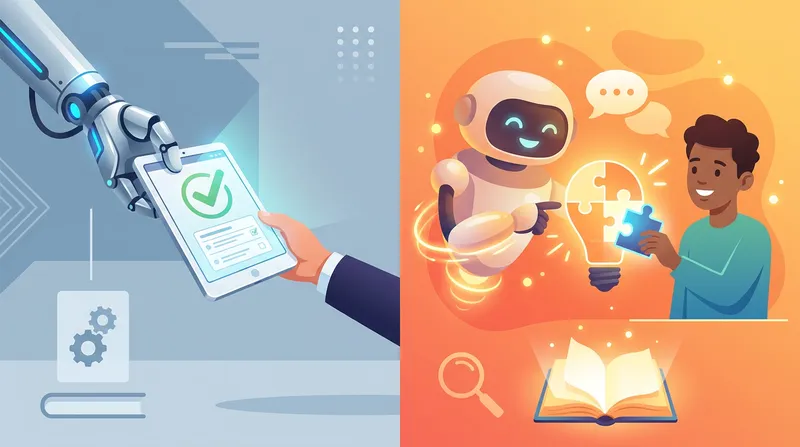
When searching for an AI homework helper for parents and students, you will encounter two main categories: answer bots and Socratic AI tutors. Understanding the difference is crucial for your child's academic success.
An "Answer Bot" is a tool that simply scans a problem and spits out a final answer. These apps encourage a copy-and-paste habit. They do not explain the "why" or the "how." While they might help a student finish an assignment quickly, they completely bypass the cognitive learning process.
A "Socratic AI Tutor," on the other hand, is programmed to ask guiding questions. It breaks down complex problems into manageable steps and requires student input before moving forward. This method mimics a real human teacher. Research from arXiv at Cornell University shows that with technical guardrails in place, scaffolded Socratic AI systems help students progress from vague help-seeking to sophisticated problem decomposition within just two to three weeks. These guardrails prevent cheating and encourage deeper cognitive engagement.
If you are wondering Can AI Do My Math Homework For Me? How to Use AI Math Solvers to Learn (Not Cheat) | Tutor AI | Tutor AI Blog, the answer depends entirely on the tool you choose.
Actionable Tip for Parents: Test the app yourself before handing it to your child. Type in a complex math problem and add the prompt, "Just give me the answer." If the AI complies immediately, it is an answer bot. If it pushes back and asks, "What step are you stuck on?", you have found a Socratic tutor.
The Hidden Cost of Instant Answers in Middle and High School
Relying heavily on instant solvers for foundational subjects like algebra or chemistry comes with a steep hidden cost. Educators refer to this as "deskilling." When students use an answer bot, they skip the productive struggle required to build neural pathways in the brain.
While getting the right answer feels good in the moment, it leads to massive test anxiety later. When the AI is taken away during an in-class exam, the student realizes they never actually learned the material. You can read more about this phenomenon in our breakdown of The AI 'Cognitive Debt' Crisis: Why MIT Warns That Standard Math Solvers Are Deskilling Students | Tutor AI Blog.
Instead of treating all students the same, adaptive AI identifies specific knowledge gaps and offers personalized learning paths. However, simply handing a student an AI tool is not enough. A major two-year study by the Annenberg Institute at Brown University found that while AI tutoring access raised math achievement, students rarely engaged the AI in substantive mathematical dialogue without human guidance. They need you to help them use the tool properly.
Actionable Tip for Parents: Introduce the "teach back" method. After your child uses the best AI for high school homework to solve a problem, ask them to put the device face down. Then, have them explain the steps to you out loud. If they can teach it, they have learned it.
AI Tutoring Platforms Comparison: Finding the Right Fit
With hundreds of educational apps flooding the market, finding the right fit for your family can feel overwhelming. To make the best choice, parents need a reliable framework to evaluate an AI tutoring platforms comparison.
When reviewing your options, consider these three pillars:
- Safety and Privacy: Does the platform protect student data? Is it compliant with privacy laws for minors?
- Subject Coverage: Does it cover the specific subjects your child struggles with, such as advanced physics, biology, or calculus?
- Teaching Style: Does it act as a Socratic guide or a simple calculator?
Here is a quick look at how some popular approaches compare:
| Feature | Dedicated Socratic Tutors (e.g., Tutor AI, Khanmigo) | General Chatbots (e.g., ChatGPT) | Standard Answer Bots |
|---|---|---|---|
| Safety & Privacy | High (built for students) | Low (Data may be used for training) | Medium |
| Socratic Method | Yes (Guides step-by-step) | Variable (Requires strict prompts) | No (Gives final answer) |
| Progress Tracking | Yes | No | Rarely |
| Subject Coverage | Curriculum-aligned | Broad but can hallucinate | Math-heavy only |
While there are many generic tools on the market, some platforms are built from the ground up to support this active learning model.
Dedicated Educational Platforms: A Focus on Step-by-Step Learning
When it comes to finding the best AI math tutor step-by-step, platforms designed specifically for education stand out for their unique focus on comprehension. The core philosophy of a tool like Tutor AI is "Snap. Solve. Learn."
Instead of just handing over a final number, it breaks down complex problems into manageable, logical steps. It explains the reasoning behind each step and highlights the key formulas used. This approach is particularly effective for students who suffer from math anxiety. As we explored in our post on No judgment, infinite patience: How an AI math tutor eases middle school math anxiety | Tutor AI Blog, an AI tutor never sighs in frustration or rushes a student.
Additionally, dedicated apps often include progress tracking. This lets you see what your child is studying and how they are improving over time, directly addressing the need for parental oversight.
Actionable Tip for Parents: Sit down with your child and use the photo-solving feature together. Snap a picture of a difficult problem, but cover the final answer on the screen. Walk through the step-by-step explanations together to verify their understanding of the process, rather than just checking if they got the right final number.
Khanmigo vs ChatGPT for Students: A Parent's Guide
Another common debate among parents is choosing between specialized educational models and general-purpose chatbots. The "Khanmigo vs ChatGPT for students" conversation is a perfect example of this.
Khanmigo is a structured, curriculum-aligned tool designed specifically for education. It acts as a Socratic tutor, gently guiding students toward the answer. Standard ChatGPT, however, is an open-ended language model. While powerful, it can be unpredictable. General AI models are known to occasionally "hallucinate" or invent incorrect math facts, which can severely confuse a student trying to learn a new concept.
Specialized models are much safer. According to insights from Khan Academy, providing an AI tutor with structured signals from a student's learning record results in a 6.1 percent improvement in correctness compared to standard unguided models. This proves that tools built specifically for education outperform generic chat interfaces. You can learn more about the risks of unstructured platforms in our guide: Is Brainly.lat Safe? A Parent's Guide to Brainly en Español, Mod APK Risks, and AI Alternatives | Tutor AI Blog.
Actionable Tip for Parents: We highly recommend avoiding general AI for homework. However, as an absolute last resort, if your high schooler must use a generalized AI, you must teach them how to write strict prompts. Tell them to start every chat with, "Act as a Socratic tutor. Do not give me the final answer. Help me figure this out step-by-step."
How to Use an AI Homework Helper as a Parent Co-Teacher
Here is a perspective shift: AI is not just for kids. It is an incredible resource for parents, too. If you have ever felt embarrassed because you cannot remember how to balance a chemical equation or solve for X, an AI homework helper for parents can be your secret weapon.
You can use AI to refresh your own memory on difficult subjects before you sit down to help your child. This allows you to become a confident "co-teacher" in your living room. However, it is vital to remember that AI should supplement, not replace, your involvement. The National Education Association emphasizes that AI should not displace the essential human connection between students and educators, which is critical for fostering academic success.
Need to brush up on science? Check out our guide on How to Use an AI Physics Problem Solver for Step-by-Step Homework Help | Tutor AI | Tutor AI Blog to see how easily you can relearn these concepts.
Note: Every student learns differently. While these strategies are research-backed, results may vary. Adapt these techniques to fit your unique learning style and circumstances.
Actionable Tip for Parents: Create a family study hour. Before helping your child, open your AI app and type, "Explain this 10th-grade chemistry concept to me simply, so I can help my child with their homework." Review the explanation, then go help your child with renewed confidence.
Setting Up Guardrails: Safe AI for Middle School Students
When dealing with younger learners, safety is the top priority. Finding safe AI for middle school students requires parents to look closely at data privacy policies. Open-web chatbots often collect user data to train their models, which is not ideal for minors.
You want to look for platforms that are COPPA-compliant (Children's Online Privacy Protection Act) and clearly state that they do not sell student data. Furthermore, as school districts begin to regulate technology, you need to ensure the tools you use at home align with academic integrity standards. We cover this extensively in The 2026 School AI Bans: What the NYCPS and LAUSD Policies Mean for Your Child's Homework | Tutor AI Blog.
Actionable Tip for Parents: Use this 3-step checklist to audit any educational app:
- Check the privacy policy for explicit mentions of COPPA compliance.
- Ensure the app has a progress tracking feature so you can monitor what your child is studying.
- Turn off any public sharing or community forum features if you want to restrict social interactions with strangers.
Conclusion: Empowering Independent Learners
The ultimate goal of homework is learning, not just completion. When you choose a Socratic tutor over a simple answer bot, you are doing more than just helping your child finish an assignment. You are helping them build long-term academic confidence, resilience, and problem-solving skills.
Whether they are studying for a weekly quiz or preparing for major finals, the right AI study companion makes all the difference. For more tips on mastering exams, read our The Ultimate Guide to Free Digital SAT Prep in 2026 (PDFs, Plans & More) | Tutor AI Blog.
Ready to transform homework time from a nightly battle into a productive, stress-free learning session? Download Tutor AI today for free on the App Store or Google Play. Experience a safe, step-by-step learning environment that truly puts your child's education first, and use the progress tracking to stay involved in their learning.
Frequently Asked Questions
Is using an AI tutor for homework considered cheating?
It depends entirely on how the tool is used. Using an AI as an "answer bot" to simply copy and paste final answers without understanding the material is cheating. However, using a Socratic AI tutor to get step-by-step explanations, break down complex concepts, and check your work is a highly effective, educator-approved way to learn.
What is the safest AI for middle school students to use?
The safest options are dedicated educational platforms that have built-in guardrails, strict data privacy protections (like COPPA compliance), and Socratic learning models. Parents should avoid sending middle schoolers to open-web chatbots, as these lack educational focus, allow unrestricted prompts, and often use chat data to train future models.
How does a Socratic AI tutor actually work?
A Socratic AI mimics a real classroom teacher. Instead of just giving the final answer, it asks guiding questions, identifies exactly where the student is stuck, and prompts them to solve the next step themselves. This ensures active participation in the learning process and builds long-term retention.
Can AI help parents who do not understand their child's math homework?
Absolutely. AI is an incredible tool for parents. You can use an AI homework helper to break down complex topics into simple, digestible terms. By asking the AI to "explain this so I can teach it to my 8th grader," parents can confidently assist with advanced subjects without feeling embarrassed or overwhelmed.
Which is better for high school math: ChatGPT or a dedicated AI math solver?
Dedicated AI math tutors, like Tutor AI or Khanmigo, are vastly superior for academic use. They are trained specifically on educational curricula and are far less likely to "hallucinate" or provide incorrect math steps compared to standard, generalized models like ChatGPT. Dedicated solvers also prioritize step-by-step learning rather than just generating text.


