Box Method, FOIL, or Grouping? Why Single-Solution Math Apps Confuse Students (And the Best Mathway Alternative)

It is a scenario that plays out in millions of households every single week. The clock strikes 10 PM, your child is staring blankly at an algebra worksheet, and frustration is running high. In a desperate attempt to finish the assignment, they scan the problem using a popular math solver app. The app instantly spits out the correct final answer, and everyone breathes a sigh of relief.
However, the relief is short-lived. The next day, the teacher hands back the assignment with a glaring deduction and a note in red ink: "Show the work we learned in class!"
This is the core problem with traditional calculators like Mathway and Photomath. They are single-solution engines. They force students down one specific algorithmic path, completely ignoring the fact that the student might have learned a totally different technique in class. When a student copies an unfamiliar method from an app, they lose points, they fail to understand the concept, and parents are left feeling helpless.
In this guide, we will explore why teachers require specific solving methods, compare popular techniques like the Box Method and Grouping, and reveal the best Mathway alternative that actually adapts to your child's classroom instruction.
The Homework Battle: When the Right Answer Gets the Wrong Grade
Modern education has fundamentally changed. If you went to high school more than fifteen years ago, you likely learned math as a series of rigid steps to memorize. Today, math apps that show work still operate on these older assumptions. They were built before modern curricula emphasized multiple solving methods. They give you the fastest route to the final number, but they do not teach the underlying concept.
When a student uses a standard step-by-step math solver, the app usually defaults to the most computationally efficient algorithm. But what happens when the teacher specifically asked the class to use a visual model? The student writes down the app's advanced algebraic steps, the teacher immediately recognizes that the student did not do the work themselves, and the student receives a zero for the problem.
This creates a massive disconnect. Students feel cheated because they technically got the right answer. Parents feel frustrated because they cannot bridge the gap between the app's rigid output and the teacher's expectations. To solve this, we need to look beyond basic calculators and find tools that act like real tutors.
Why Do Teachers Care How You Solve It?
It is easy to dismiss a teacher's demand for a specific method as unnecessary strictness. You might hear your child complain, "But my way is faster!" However, there is a very good reason why modern curricula require multiple math methods.
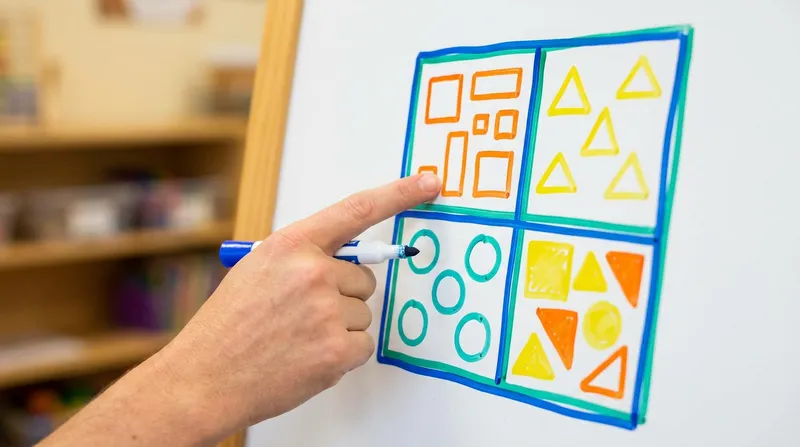
According to experts writing for Mathematical Musings, teaching multiple methods encourages students to think strategically about the best approach for any given problem. It builds mathematical flexibility. When a student learns to solve a problem visually, conceptually, and algebraically, they develop a deep understanding that prepares them for advanced high school and college courses.
For example, visual methods taught in middle school algebra directly translate to complex calculus concepts later on. If a student bypasses the visual method by using a basic app, they miss out on building that foundational scaffolding. This is exactly why understanding the "how" and "why" is so critical, especially when preparing for high-stakes testing. You can learn more about how shifting educational standards impact test-taking in our parent's guide to the 2026 AP Exam changes.
Factoring Quadratics: Box Method vs Grouping vs FOIL
To truly understand why a single-solution algebra factoring calculator fails students, we need to look at a concrete example: how to factor quadratics. Let us say a student is asked to factor the equation x^2 + 5x + 6.
There are three primary factoring methods in algebra, and a student's textbook will usually focus heavily on just one of them at a time.
1. The FOIL Method (First, Outer, Inner, Last) This is the traditional method most parents remember from their own school days. It involves working backward from the expanded equation to find two binomials (x + 2)(x + 3). It relies heavily on mental math and guessing-and-checking factors.
2. Factoring by Grouping This method is highly favored by modern algorithmic calculators. It involves splitting the middle term (5x) into two separate terms (2x + 3x), and then factoring the equation in pairs. It is highly effective for complex equations, but it can be confusing for beginners who struggle with abstract algebra.
3. The Box Method (Area Model) This is a highly visual approach popular in modern classrooms. Students draw a 2x2 grid (a box) and place the terms inside the squares to find the greatest common factors on the outside edges. It turns abstract algebra into a visual geometry problem.
Here is a simple visual representation of the Box Method for x^2 + 5x + 6:
      x      +3
   +------+------+
 x |  x^2 |  3x  |
   +------+------+
+2 |  2x  |   6  |
   +------+------+
By finding the area of each small box, students can easily see that the outside edges (x + 2) and (x + 3) are the correct factors.
Here is the pain point: If your child's teacher spent all week teaching the Box Method, and your child uses a standard app to check their homework, the app will almost certainly spit out the steps for Factoring by Grouping. The student is left completely lost, unable to draw the required box, and unable to show the correct work.
The Problem with Traditional Math Solvers: Symbolab vs Mathway
When comparing legacy giants in the educational space, such as Symbolab vs Mathway, you will find that both are incredibly powerful computational engines. However, they share a fatal flaw when it comes to actual learning. They are rigid, one-size-fits-all algorithms.
If you type "factor x^2 + 5x + 6" into these platforms, they will almost universally default to Factoring by Grouping. They do not pause to ask, "How did your teacher explain this to you today?" As a result, students who rely on them often face accusations of academic dishonesty. When a seventh-grader suddenly turns in homework featuring college-level algebraic grouping instead of the visual area models taught in class, teachers know exactly what happened.
Research from the RAND Corporation highlights that the effectiveness of educational technology plummets when it does not align with specific classroom objectives. An app is only useful if it supports the curriculum. For a deeper dive into how different apps stack up in the modern classroom, check out our comparison of the best AI STEM solvers.
The Parent Trap: Why Modern Math Homework Feels Impossible
We cannot discuss math apps without addressing the immense pressure placed on parents. If you have ever tried to help your child with math homework only to realize you do not recognize the methods being taught, you are not alone.
According to Education Week, parents with low confidence in their own math abilities experience significant negative feelings when trying to help with unfamiliar homework. Worse, this parental math anxiety can accidentally transfer to the student, lowering the child's participation and performance over time.
Furthermore, experts at Mathnasium point out that modern content standards emphasize conceptual understanding through visual models. Because most parents were only taught traditional step-by-step methods (like FOIL), they are left unable to assist effectively.
Simply handing your child a basic AI homework helper or a Photomath alternative does not solve this communication gap. To truly support families, an adaptive AI tutor needs to keep parents in the loop. Features like a dedicated Parent Dashboard and Progress Tracking allow parents to see exactly which topics their child is struggling with, eliminating the guesswork. If you are worried about how technology is impacting your child's learning habits, read our parent's guide to AI homework tools and Photomath alternatives.
Meet Tutor AI: The AI Math Solver With Steps That Match Your Class
This is exactly why Tutor AI was built. It is not just an answer engine; it is an adaptive learning platform designed to mimic a real, empathetic human teacher.
Instead of forcing your child down a single algorithmic path, this tool provides an AI math solver with steps that adapt to your specific needs. If your child scans a quadratic equation, they can simply type, "Solve this using the Box Method," or "Show me how to do this with Grouping." The app will instantly generate the exact visual steps and explanations required by the teacher.
Some of the specific step-by-step methods supported include:
- The Box Method (Area Model)
- Factoring by Grouping
- The traditional FOIL method
- Visual fraction models
This multi-method capability makes it the premier Mathway alternative. Best of all, it features offline availability, so late-night homework sessions are never derailed by a spotty internet connection. You can finally sit down with your child, ask the AI to explain the concept using the classroom method, and learn together.
To see how this personalized approach outperforms rigid calculators, explore our insights on why the best AI math tutor balances both calculation and explanation.
3 Tips for Choosing the Best Math Solver Apps for Students
If you are evaluating the best math solver apps for students, you need to look beyond OCR scanning speed and basic answer generation. Here are three actionable tips to ensure you choose a tool that actually promotes learning.
1. Look for Multi-Method Support Does the app accommodate different learning styles? According to the University of Chicago, giving students the opportunity to use alternative algorithms motivates them and accommodates different learning styles much better than forcing a single rote procedure. Ensure the app you choose can switch between visual, conceptual, and traditional methods on demand.
2. Prioritize Explanation Over Instant Answers Does the app teach the "why" behind the math? An app that only gives the final number is a calculator, not a tutor. Look for platforms that break down complex problems into logical, digestible steps, highlighting the key formulas used along the way.
3. Ensure a Conversational Interface Learning is rarely a straight line. Students often get stuck on one specific step of a problem. The best apps allow students to ask follow-up questions, such as, "Why did you move the negative sign here?" This interactive dialogue builds genuine comprehension.
For more advice on using advanced AI tools for high-stakes test prep, check out our guide to using AI for SAT math prep.
Note: Every student learns differently. While these strategies are research-backed, results may vary. Adapt these techniques to fit your unique learning style and circumstances.
Ready to turn 10 PM homework panic into a calm, confident study session? Try Tutor AI and let your child choose the method their teacher actually taught. Snap. Solve. Learn.
Frequently Asked Questions
What is the best Mathway alternative for high school algebra?
The best alternative is an adaptive AI platform like Tutor AI. Unlike traditional calculators that force a single algorithmic path, it allows students to choose their required solving method, ensuring their homework matches their teacher's exact expectations.
Why do teachers deduct points if the math answer is correct?
Modern math standards focus heavily on conceptual understanding rather than just getting the right number. Teachers need to see the specific steps taught in class to verify that the student actually understands the underlying mathematical process.
Can an AI math solver show work using the Box Method?
While traditional apps usually default to Factoring by Grouping or the FOIL method, advanced AI platforms like Tutor AI can specifically generate visual steps for the Box Method upon request, perfectly aligning with modern classroom instruction.
Is Photomath or Mathway better for factoring quadratics?
Both apps are incredibly fast at scanning and solving, but they are limited because they usually default to one specific solving method. An AI math tutor that offers multiple methods is a far superior choice for homework help, as it adapts to the student's unique learning style.
How can parents help with math homework when they do not know the method?
Parents should utilize adaptive AI tools that can explain modern methods step-by-step. By using an app that can break down unfamiliar concepts like the Box Method, parents can turn the AI into a co-teacher, allowing them to support their children without frustration.