
There's a feeling every student knows: the looming dread of a big math test. The formulas blur, the concepts feel abstract, and the pressure mounts. For many, the default strategy becomes late-night cramming fueled by caffeine and hope.
But what if there was a better, less stressful way to prepare? A method that builds real confidence, reduces anxiety, and leads to lasting understanding?
This guide is for the entire academic team: students seeking effective strategies, parents looking for ways to support their children, and educators who want to help. We'll move beyond generic advice to give you a concrete, step-by-step plan to tackle math test prep head-on.
Key Takeaways
- Start Early: Begin studying at least one week before the test to avoid cramming and build a solid foundation.
- Practice Actively: Don't just re-read notes. Create and take practice tests under timed conditions to simulate the real exam.
- Learn from Mistakes: Use incorrect answers as a guide. Analyze why you made a mistake to deepen your understanding.
- Manage Anxiety: Use mindfulness techniques and a growth mindset to stay calm and confident during study sessions and the test itself.
Why Cramming for a Math Test Doesn't Work
Before building the right study plan, it's crucial to understand why last-minute cramming fails for math. Unlike subjects where you can memorize facts, math is cumulative. As educators from Montclair State University emphasize, each new skill builds upon the last. You can't understand algebra without mastering arithmetic, or succeed in calculus without a firm grasp of algebra.
Cramming forces your brain to hold a massive amount of procedural information in its short-term memory, which is quickly forgotten. True math success comes from consistent practice and deep understanding—exactly what our study plan focuses on.
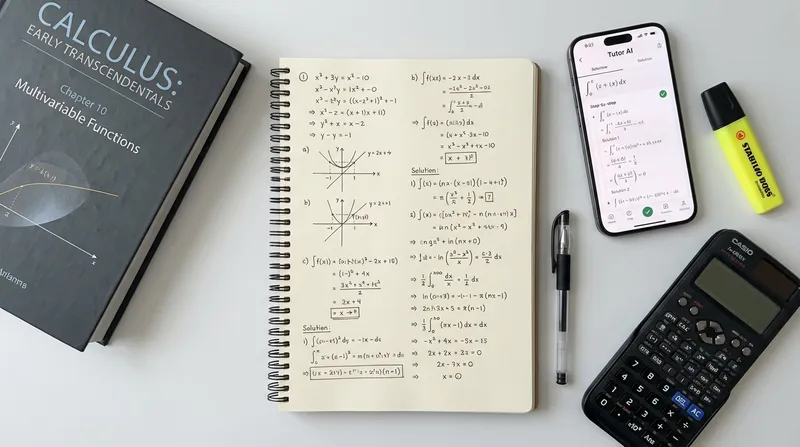
The Ultimate Math Test Study Plan: A Timeline Approach
Feeling overwhelmed? Let's break it down. A structured timeline can turn a mountain of material into manageable daily tasks. This framework, adapted from a similar approach suggested by the University of the People, can be used for any test, from a weekly quiz to a final exam.
One Week Before the Test: Build Your Foundation
- Gather and Organize: Collect all your notes, homework, worksheets, and quizzes for the unit. Organize them by topic to see the full scope of the test.
- Identify Weak Spots: Flip through your materials and be honest. Which homework problems were the hardest? Where did you lose points on quizzes? Make a targeted list of these topics.
- Review Core Concepts: Reread your notes and textbook chapters, paying special attention to your weak spots. The goal is to refresh your memory, not master everything yet.
3 Days Before the Test: Active Recall and Practice
This is where real learning happens. Instead of passively re-reading, you need to actively retrieve information. Math education experts at UC Davis confirm that this retrieval practice is one of the most effective ways to build strong, lasting memories.
- Create a Practice Test: Don't wait for a review sheet. Create your own! Select a mix of problems from your homework and textbook, ensuring you cover all topics. Include a few tricky word problems to test your application skills.
- Simulate Test Conditions: Take your practice test in a quiet space without distractions. Set a timer to mimic the real test's pressure. Do not look at your notes.
- Grade Yourself and Analyze: Once you're done, grade your practice test. Every problem you got wrong is a powerful learning opportunity.
The Night Before the Test: Review, Relax, and Rest
This is not the time to learn new material. Your goal is to be calm, confident, and well-rested.
- Light Review Only: Look over your practice test, especially the mistakes you corrected. Glance at your formula sheet. This should take no more than 30-45 minutes.
- Organize Your Bag: Get your calculator (with fresh batteries!), pencils, and any other required materials ready to go. This small step eliminates morning-of panic.
- Relax and Unplug: Put your books away. Watch a movie or do something you enjoy. Your brain needs downtime to consolidate what you've learned.
- Get a Good Night's Sleep: This is one of the most critical study tips for students. A tired brain can't retrieve information or solve complex problems effectively.
How to Learn From Your Mistakes (The Smart Way)
Now that you have your timeline, let's talk about the most powerful learning tool: your mistakes. Getting a problem wrong is a gift—it's a spotlight showing you exactly where to focus.
- Create a Mistake Log: In your notebook, create three columns: "The Problem," "My Mistake," and "What I Need to Remember."
- Analyze the 'Why': Don't just find the right answer. Dig into why you made the mistake. Was it a simple calculation error? Did you use the wrong formula? Did you misunderstand a core algebra concept?
- Use Tools for Clarity: If you're stuck on a step, use a tool designed for learning. Instead of just searching for an answer, find an app that provides detailed, step-by-step solutions. This isn't about getting the answer; it's about seeing the exact point where your process went wrong and understanding the logic to get it right next time.
The Parent & Tutor Playbook: How to Help Effectively
Just as students benefit from a structured plan, parents and tutors are vital members of the academic team. You can foster an environment that supports understanding and reduces anxiety. The key is to be a guide, not an answer key. As educational publisher HMH notes, even parents who dislike math can create a positive environment.
- Ask Guiding Questions: Instead of giving the answer, prompt thinking. For example, instead of saying, "First, you need to distribute the 3," try asking, "What's the first thing you think we should do with that number outside the parentheses?"
- Focus on Effort, Not Just Results: Praise hard work and persistence. A growth mindset—the belief that ability develops through dedication—is crucial. Research from NWEA highlights the importance of integrating math talk into daily life to build confidence.
- Use Modern Tools Together: Sit with your student and use a tool like Tutor AI to review their homework. The app's Progress Tracking feature can help you see where your child is excelling and where they need more support, turning a potential homework battle into a collaborative moment of homework help.
Taming the Beast: A Guide to Overcoming Math Anxiety
For many, the fear of math is as challenging as the math itself. This "math anxiety" is a real psychological response that can impair performance, but it can be managed. Research has found that interventions focusing on emotional regulation can significantly improve performance.
- Practice Mindfulness: Before you start studying, take five deep breaths. This simple action can calm your nervous system and help you think more clearly.
- Adopt a Growth Mindset: As shown in a study from ResearchGate, combining mindfulness and a growth mindset is a powerful way to reduce math anxiety. Instead of saying, "I'm bad at math," try saying, "I'm still learning how to do this type of problem."
- Start with a Win: Begin your study session with a problem you know you can solve. This small success builds momentum and confidence.
Disclaimer: This article provides general information and coping strategies and is not a substitute for professional mental health advice. If math anxiety feels overwhelming or significantly impacts your well-being, please consider consulting a school counselor or mental health professional.
How to Use AI Tools to Actually Learn (Not Just Get Answers)
In a world with powerful AI tutors, it's tempting to just get the answers. However, the smartest students use these tools as a 24/7 learning assistant, not a crutch.
Think of it this way: a calculator is a tool. You use it for complex calculations, but you still need to know what to calculate and why. Similarly, an AI learning tool's power isn't in giving you the final answer. The real value is in:
- Instant Photo-Based Solving: When you're stuck, you don't have to stay stuck. Get immediate help by snapping a picture.
- Step-by-Step Explanations: Use the detailed breakdowns to learn the process. This is how you prepare for the test, where you won't have the app.
- Personalized Learning: The app can help identify your weak spots from the problems you scan, helping you focus your practice on what matters most.
Using technology this way—to understand your mistakes and learn the process—is studying smarter, not harder. It's the best way to get effective math help.
Tips for During the Test
Your preparation is done. Now it's time to perform. Educators offer excellent advice for test-taking itself.
- Brain Dump: As soon as you're allowed, write down key formulas at the top of your paper so you don't have to worry about forgetting them.
- Scan the Test: Quickly look over the entire test to see how long it is and what types of questions there are. This helps you budget your time.
- Tackle Easy Questions First: Build confidence and secure easy points by answering the questions you know first.
- Show Your Work: Even if you make a small error, many teachers give partial credit if they can see your thought process. For complex problems like those in Algebra 1, showing your steps is crucial.
Your Path to Math Confidence
Studying for a math test doesn't have to be a stressful experience. By starting early, creating a structured plan, learning from your mistakes, and managing anxiety, you can walk into any exam feeling prepared and confident. Remember that math is a skill you build over time, not something you're either good at or not.
Use every resource available to you—your teacher, your textbook, and smart learning tools—to support your journey. With consistent effort and the right strategies, you can ace your next math test and build a strong foundation for future success.
Ready to stop stressing and start understanding? Get instant, step-by-step math help with Tutor AI.